From medieval times, Golspie’s history has been shaped by its proximity to Dunrobin Castle, seat of the Clan Sutherland. Yet it has also been home to generations of ordinary people making their living from the land and sea- a history that can be overshadowed by the, often controversial, Sutherland story. Further divides existed between the Gaelic-speaking fishing community in Fishertown and the rest of the settlement, with separate schools, churches and a different rhythm to daily life.
This walk from Fishertown in the south to Dunrobin Castle to the north of Golspie presents the ‘Great Divide’ between these sides of local life.
If travelling by car, the best place to park is the Shore Street carpark.
This itinerary is presented in collaboration with Golspie Heritage Society.
Fishertown
Visit the east end of Golspie for an appreciation of its important fishing heritage.
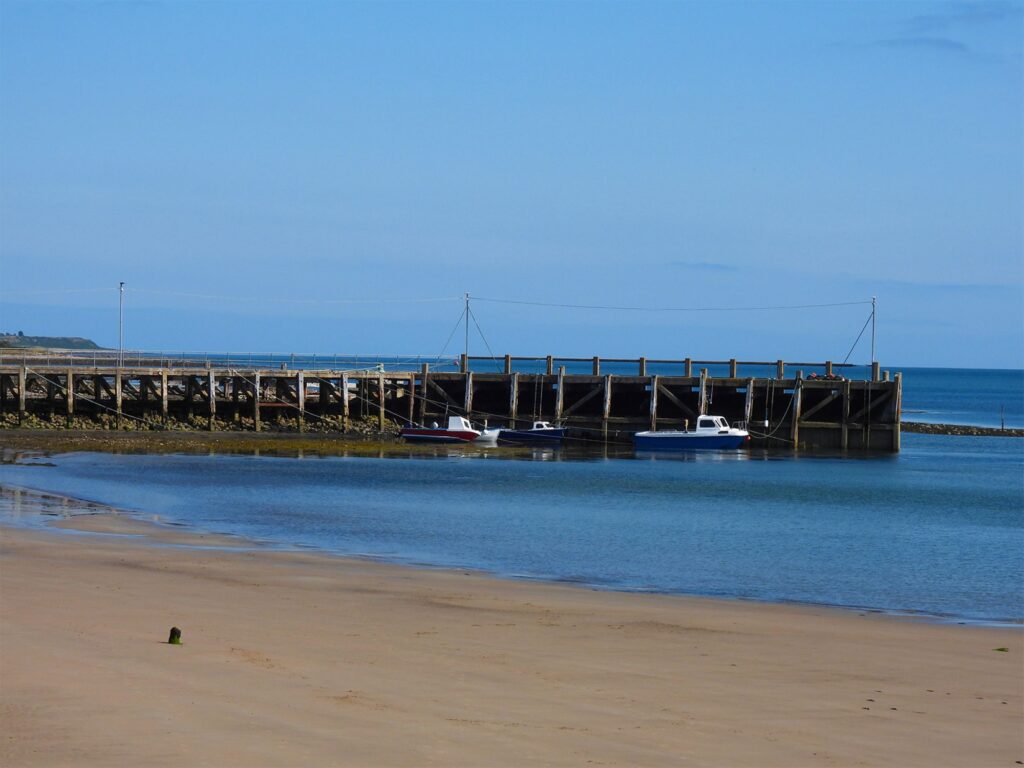
Start at Golspie Pier. The original pier was built in 1895 to serve Golspie Fishertown, a small settlement built in the 1830s to accommodate the fishing community that had existed here for centuries. Before the pier was built the women of Fishertown had to carry the men to their boats on their backs, so that they didn’t start their working day already wet. Here there is an information plaque installed by The Golspie Fishertown Project (book also available) which will give you more details about this history- they also have a website here.
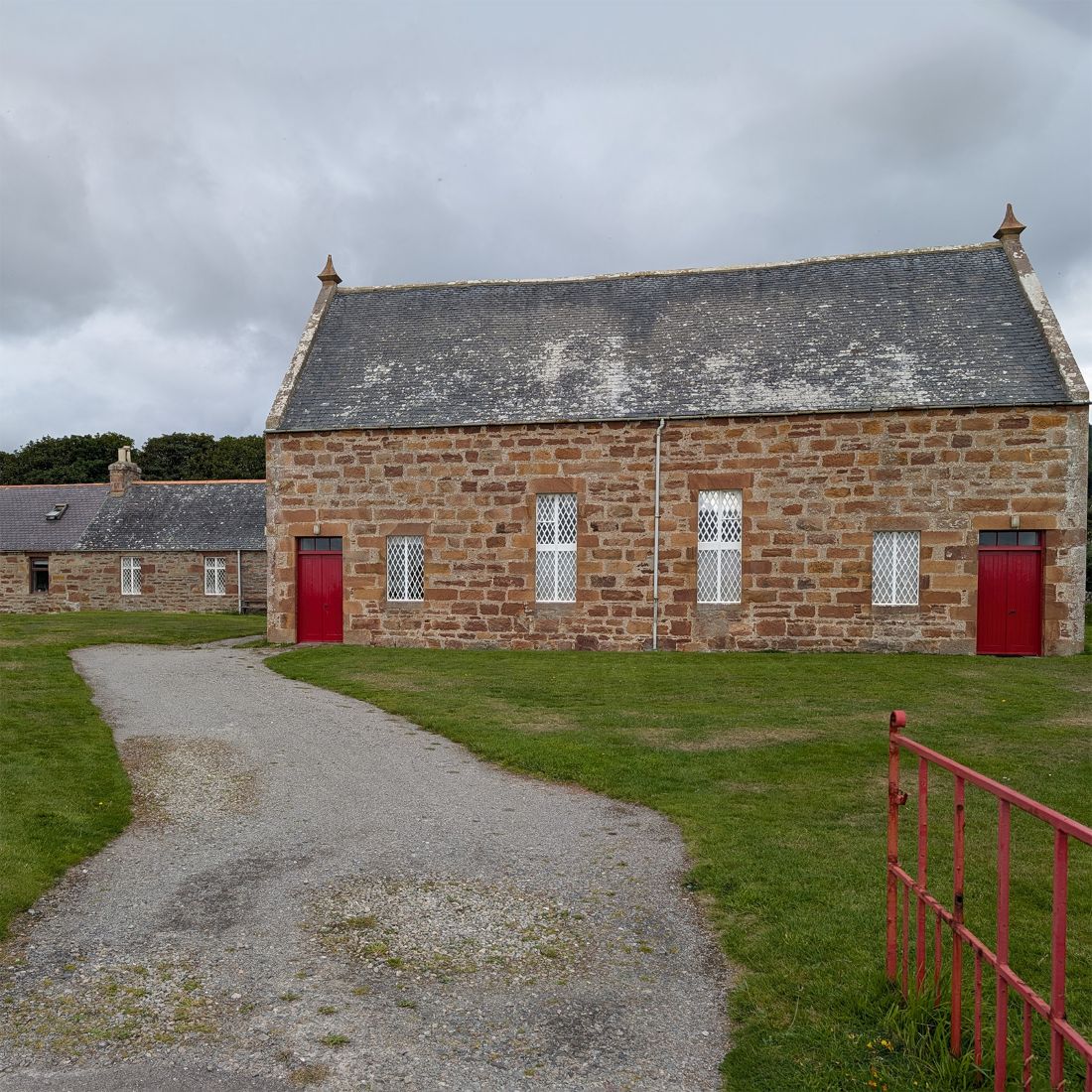
Looking along to the left down Church Street, the Seafront Centre (former Gas Manager’s house) is all that remains of Golspie’s gasworks. commissioned by the Duke of Sutherland to supply gas to Dunrobin Castle around 1840. This meant that, unusually for this time, residents of Fishertown had gas piped into their houses. Golspie Heritage Society have published an album of historical photographs of the gasworks here. Further down is the red rubble stone Free Church of Scotland built in 1844 and originally serving the Fishertown community, with a former school house and schoolmaster’s accommodation attached.
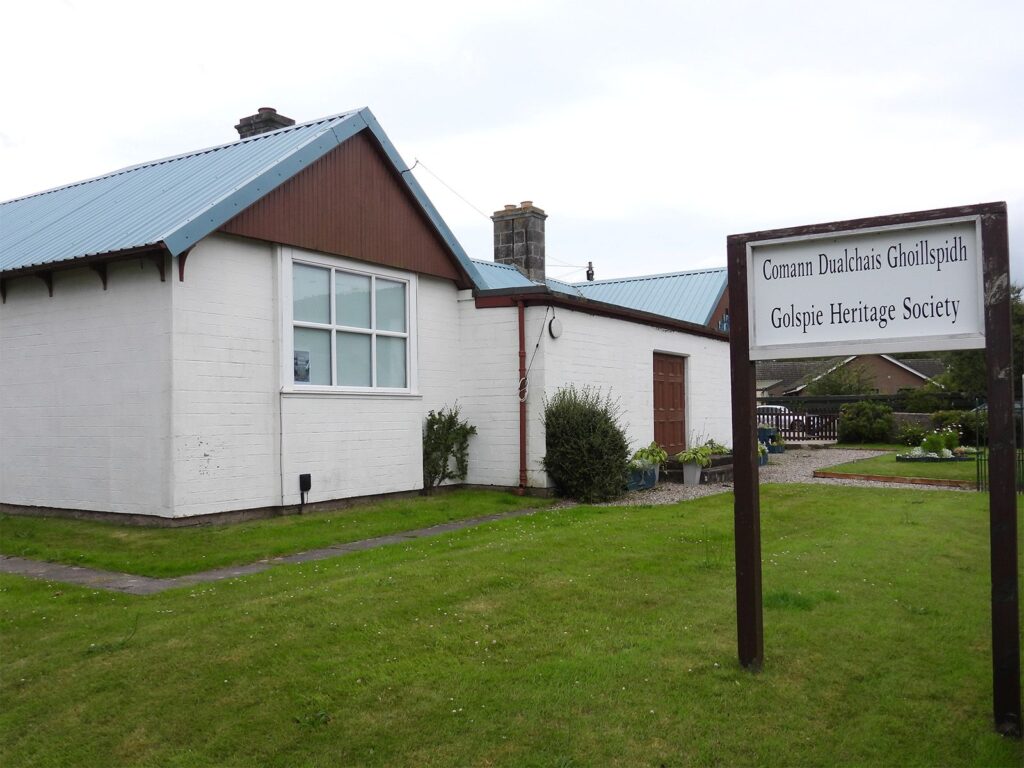
You could consider a small detour along Sutherland Road to Golspie Heritage Society to learn more. The building originally the ‘Fishermen’s Welcome Institute’, a building commissioned by Duchess Millicent with a lecture hall, meeting rooms and a public bar. Amongst other artefacts, the society care for a barometer that was installed on Shore Street in the 1860s by the Duke of Sutherland to help fishermen judge the weather. The society is open on a Tuesday morning, for monthly lectures or by special arrangement- visit their website for more information.
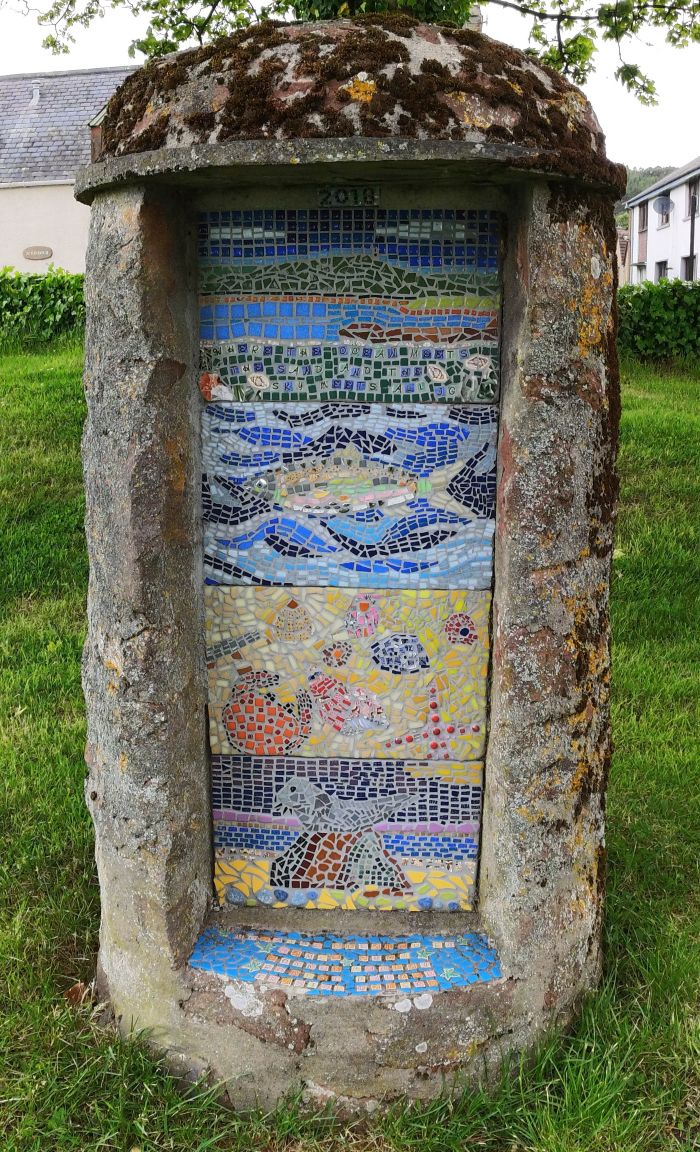
Walk along Shore Street towards the Shore Street Carpark. Fishertown was centred here on Shore Street and has some of the original houses remaining, although these have been much altered. At the seating area you can see markings on the ground where some of the houses, now demolished, were sited, and there is a series of mosaics commemorating Golspie’s fishing heritage. The barometer was once displayed inside the cairn that now hosts a mosaic, but was moved to Golspie Heritage Society for preservation.
Golspie centre and Duke Street
Continue exploring along Main Street before moving into the Sutherland heartland.
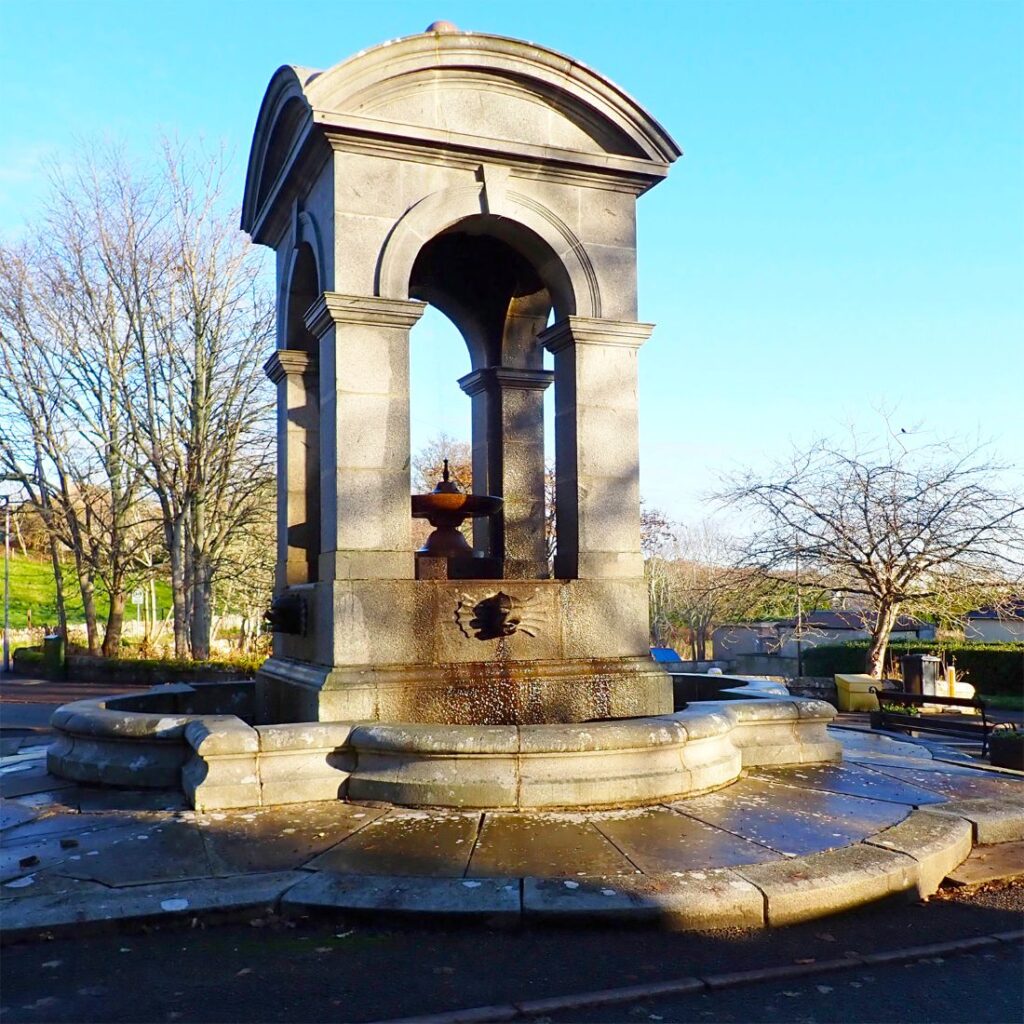
From Shore Street either walk along Main Street or parallel to it along the beachfront- there are plenty of places to cut back through. You could detour up Fountain Road to see the memorial fountain dedicated to Duchess Elizabeth. The church opposite, formerly the United Free Church, built in 1906, is now a community and events space managed by GoGolspie
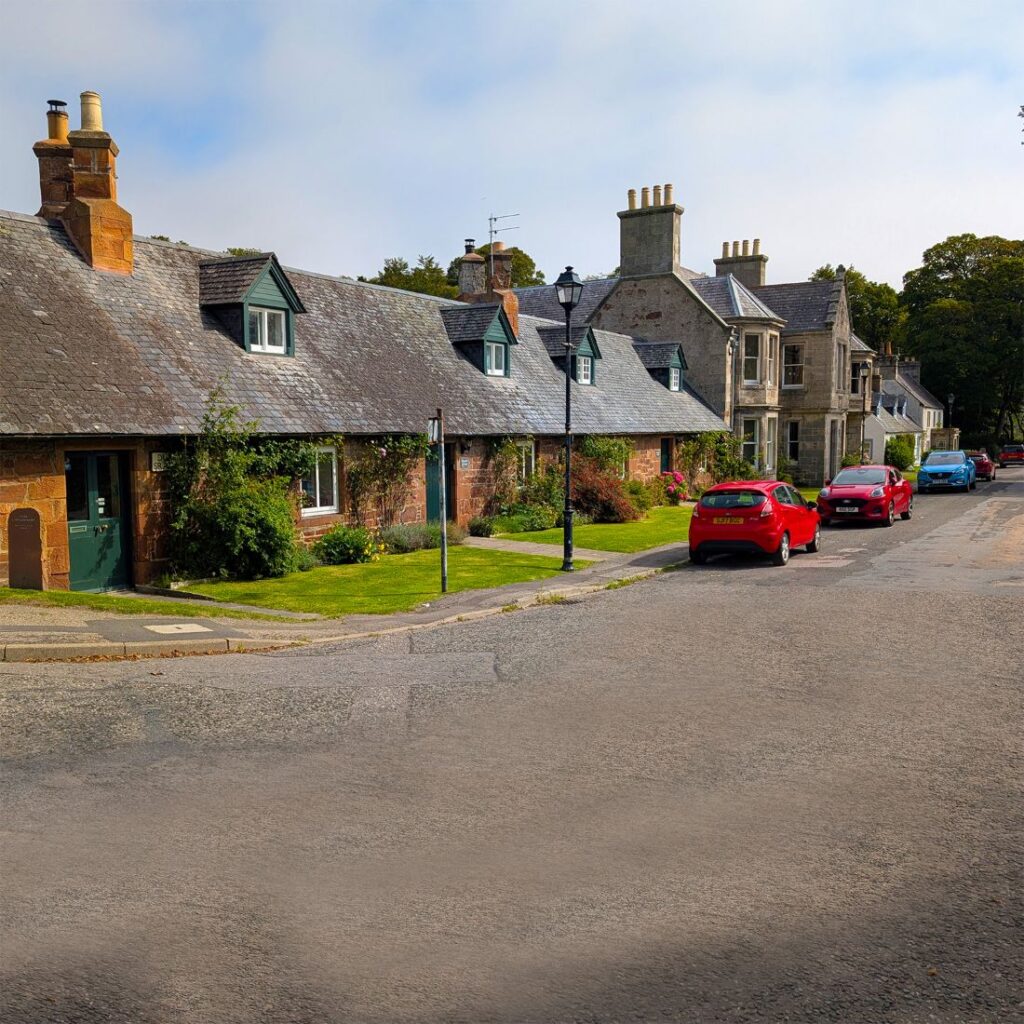
At the end of Main Street turn onto the picturesque Duke Street. This was the original road to the castle and consists of a street of terraced cottages and a large building that housed the former offices of Sutherland Estates, where the business of the Sutherland family was conducted. Other buildings connected to the Sutherland estate include Tower Lodge, once the home of the estate factor, which can be accessed by a footbridge or across the ford.
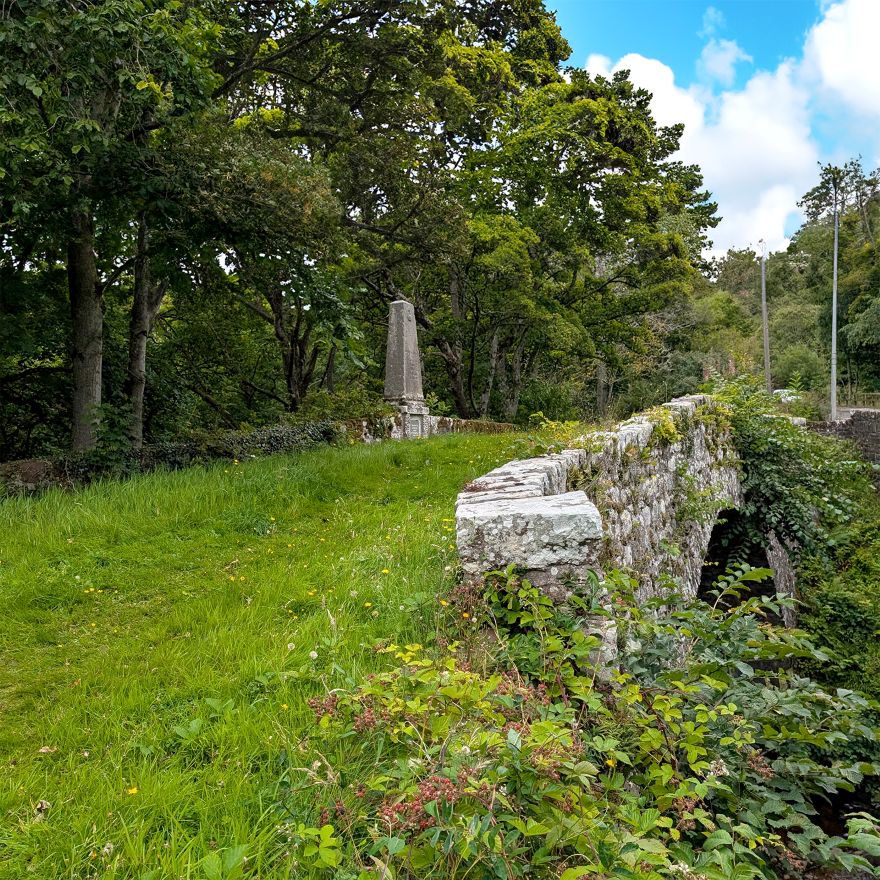
At the end of Duke Street you can either cross the bridge and take the footpaths towards the grounds of Dunrobin Castle, or retrace your steps back along Duke Street and turn right onto Old Bank Road. On your right you will find a grass covered bridge built around 1810 when the main road north was diverted. An obelisk which was the rallying point of the Sutherland Clan, probably moved from an earlier site, bears the inscription ‘Morfhear Chatt/do/Cheann-na-Droichait big Gairn/Chlann Chattich/Nam Buadh’ (‘The Chief of the Sutherland Clan to the head of the little bridge calls the Sutherland men of the victories’).
Dunrobin Castle
The castle and ‘The Mannie’ are probably Golspie’s most iconic sites.
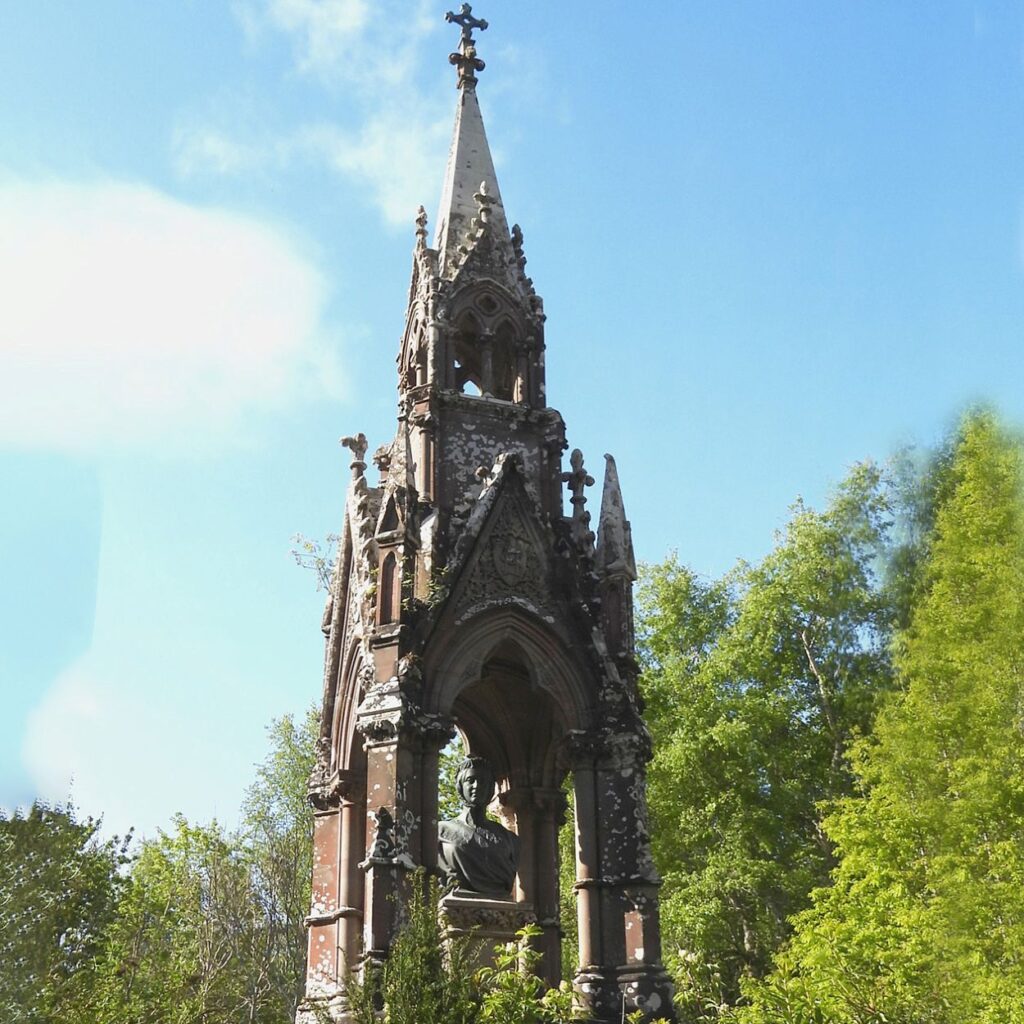
Continue along the A9 then turn right into Dunrobin Castle grounds. Dunrobin Castle has been the seat of the Sutherland clan since the 12th century and the oldest parts of the castle still date from this time, though it has been added to over the centuries. In the grounds there is a Gothic style memorial to the Duchess Harriet, wife of the 2nd Duke of Sutherland, who served several times as Mistress of the Robes to her friend Queen Victoria. Queen Victoria laid the foundation stone for the memorial in 1872. The castle museum displays local archaeological finds and artefacts.
To extend this tour you could consider a walk to ‘The Mannie’, representing the first Duke of Sutherland, who became notorious through the part he played in the Sutherland Clearances.