A heritage walk through Golspie’s heart

This walk takes you through the heart of Golspie, from the west end to the east, pointing out well-loved local landmarks along the way.

This itinerary is presented in collaboration with Golspie Heritage Society.

Appropriately, the walk begins at the building of Golspie Heritage Society.

1. Start at Golspie Heritage Society. They have a selection of displays about local life and history. They are open on Tuesday mornings, for monthly meetings, or by arrangement. See their website for more details- it also contains a wealth of information about Golspie’s past. The building itself was originally the ‘Fishermen’s Welcome’ with a lecture hall, meeting rooms, and a public bar. 

2. Golspie’s War Memorial is next to the museum. The memorial takes the form of a Celtic cross with casualties from WW1 and WW2 inscribed on bronze plates (though not all the lost have been recorded). The Memorial garden has regularly won Legion Scotland ‘Best Kept War Memorial’ in the ‘Small Community with Garden’ category. Golspie Heritage Society has an album of historic photographs here.   A book commemorating the casualties of WW1 is also available on the website.
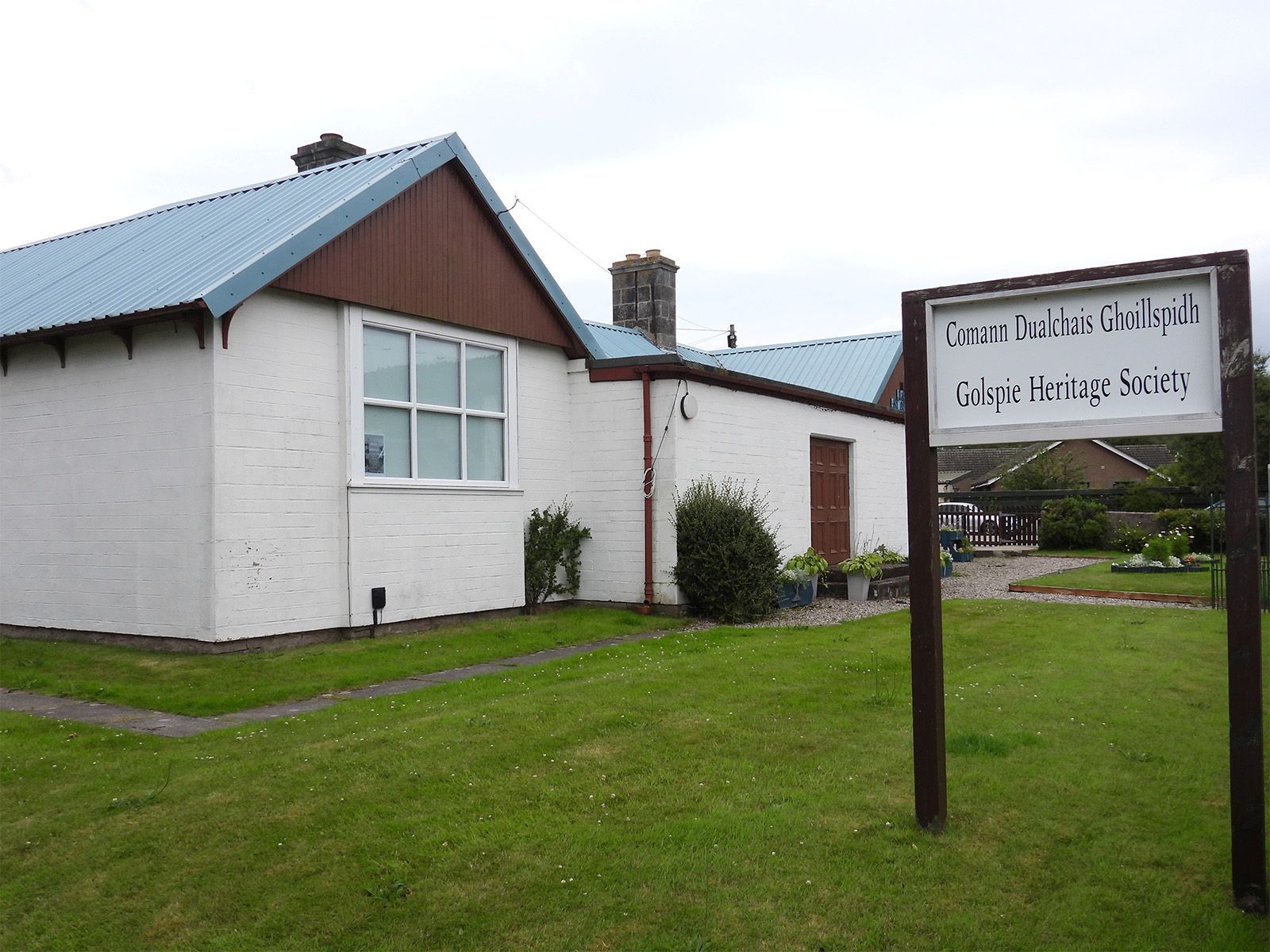
Golspie Heritage Society

Image 1 of 3

Golspie’s main street hosts many historic buildings that have been used for different purposes over the centuries.

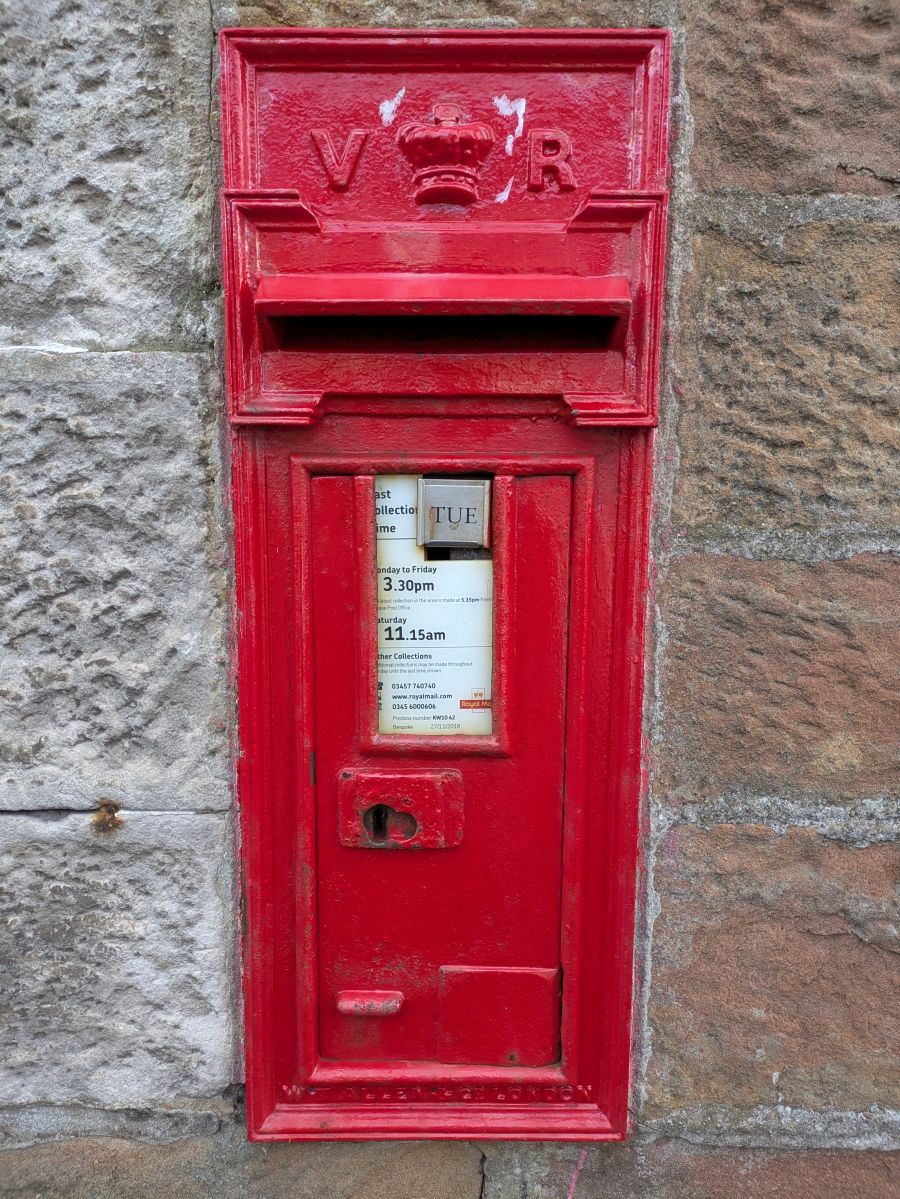
3. Walk along Main Street. Look on the right-hand side of the street for the postbox from the Victorian era marked with the Royal Cypher ‘VR’ (a second one, thought to be the oldest in Scotland, is inset in the wall of the Golspie Inn). There is another Victorian-era artefact across the street- the clock hanging outside the YMCA building has the year of the Queen’s accession to the throne on one side, and that of her Diamond Jubilee on the other. Queen Victoria stayed at Dunrobin Castle for a week in 1872 and visited Golspie during that time- she is known to have ridden up to the Big Burn waterfall on a pony.

4. The Fountain Road car park was once the site of Watson’s Temperance Hotel– and the Caberfeidh Hotel was where the Salt House is now. Boosted by the railway opening in the 1860s, Golspie became a tourist destination and once boasted 5 large hotels, with visitors coming for tennis and golf. While the Temperance Hotel is no more, some of the other historic hotels still exist and welcome visitors today.

5. Golspie also had several banks. This area was croft land until the British Linen Bank built their local headquarters here in around 1814 (they were later taken over by the Bank of Scotland). The Clydesdale Bank also had a branch here. Both are now listed buildings. In 2025 Sutherland became the first county in Scotland to have no banks at all when the Bank of Scotland here shut down.

6. There has been a chapel at the site of the current St Andrews Church since the thirteenth century. The current building dates from the 1730s but may have incorporated part on an earlier building- some of the interior fittings and fixtures still date from that time. There are also many ancient gravestones here.

The VR postbox

Image 1 of 3

Heading out of Golspie along Old Bank Road, there is still much to see.

7. The hotel on the left is another historic building- it has been guest accommodation under several guises but was originally another bank- the Aberdeen Town and County Bank.

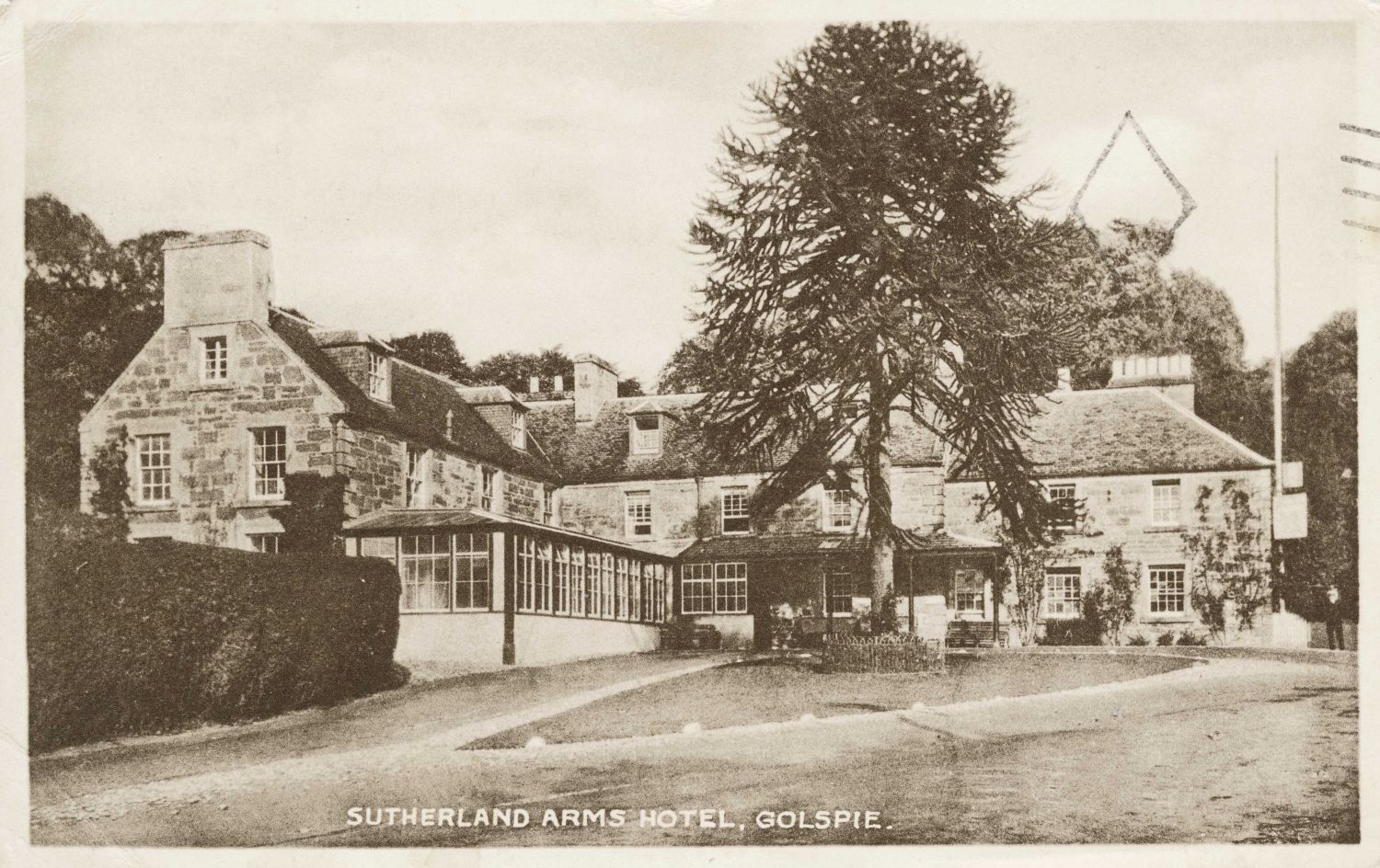
8. There has been a hotel, known as either the Golspie Inn or Sutherland Arms, since 1808.

9. The drill hall was built in 1892 for use by the Sutherland Volunteers and later the Territorial Army. There was a rifle range at the back, and it was also used for community social and fundraising events. The Indian regiment utilised it during WW2 as a place for the soldiers to sleep (officers slept in the Golspie Inn, the Sutherland Arms at that time, across the road). It was used until the 1990s. Golspie Heritage Society have published historical images here.

10. Originally there were two mills at this site. The first was built by the Countess of Sutherland in 1816 to grind grain and wheat, and the second in 1863 to grind oats and bere. The latter was fully restored in 1992 and only stopped operating in 2022.

To extend this tour you could complete the Big Burn Walk, or walk into the grounds at Dunrobin Castle and consider doing the ‘The Great Divide’ tour in reverse.  ADD LINK

This photograph from the 1930s shows the Golspie Inn, then called the Sutherland Arms. Photograph from Highland Libraries, courtesy of ambaile.org.uk.

Image 1 of 3

This photograph from the 1930s shows the Golspie Inn, then called the Sutherland Arms. Photograph from Highland Libraries, courtesy of ambaile.org.uk.