From the dramatic Dunrobin Castle to the poignant war memorial and the annual Gala festival. Golspie has a vibrant and rich heritage for all to discover. A brilliant resource for anything history/heritage related in the area can also be found here.
Battle of Littleferry Monument
The Battle of Littleferry was fought on 15th April 1746, the day before Culloden. A local force, loyal to the Government and King George II, and based on three militia companies, defeated a Jacobite Regiment led by the 3rd Earl of Cromartie. The action may have denied Prince Charles much needed weapons, money and men.
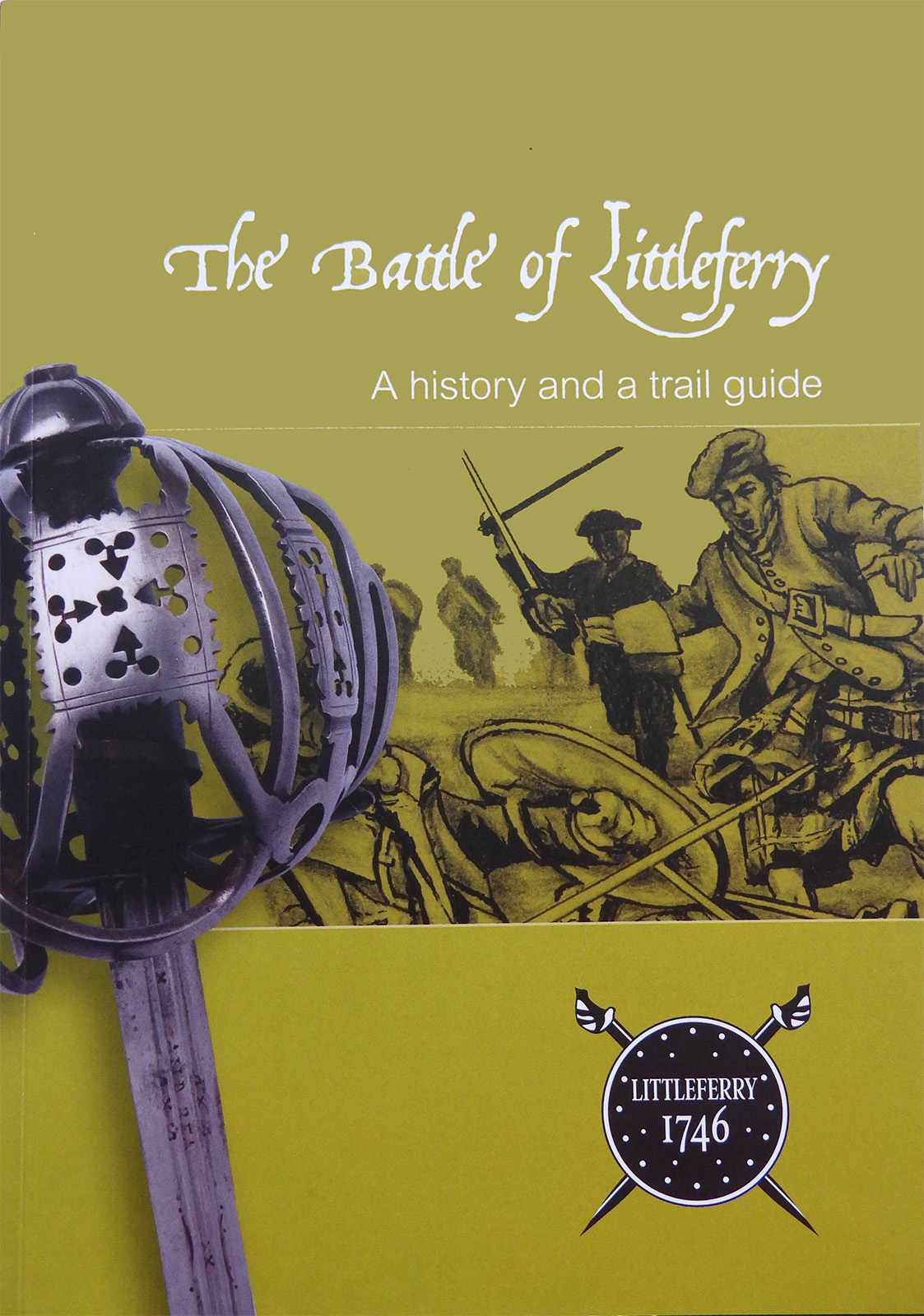
On 15th April 2022, a memorial stone was unveiled at the site of the battle on Ferry Road, and dedicated in memory of those who died on both sides. The book “The Battle of Littleferry, A History and Trail Guide” was launched. The book can be purchased locally at Lindsay & Co., Golspie Pharmacy, Dornoch Book Shop, Ullapool Book Shop, Historylinks – Dornoch, Timespan – Helmsdale, and Otter’s Couch – Brora. The Golspie Heritage Society Project Team can be contacted either through their Facebook page or by email to battleoflittleferry@gmail.com (click on image)
Carn Liath Broch
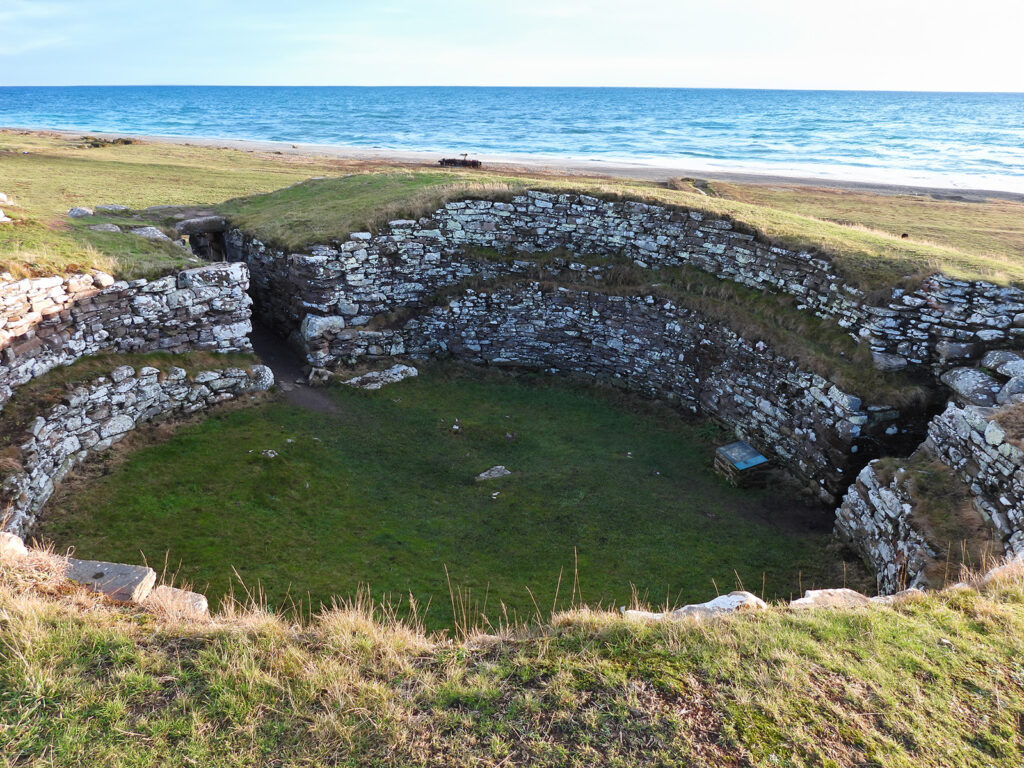
Carn Liath is a remarkable Iron Age broch and settlement, boasting thick stone walls and a raised mound with sweeping sea views. Brochs are only found in Scotland, mostly in the North and West. You can walk inside the structure and gain an insight into Scotland’s ancient past. Finds from Carn Liath can be found in Dunrobin Castle Museum. The Broch is located around 3 miles north of Golspie, it is on the bus route (Traveline Journey Planner), can be accessed on foot by the coastal path, there is a car park on the opposite side of the road.
Countess Elizabeth of Sutherland (1765–1839) Memorial Fountain
The Countess of Sutherland Memorial Fountain is an ornamental fountain located on Fountain Road opposite Fountain Road Hall. It was designed by Charles Barry in 1851 and dedicated to the First Duchess of Sutherland, Elizabeth Sutherland, recognising her significant impact on the region’s agricultural and industrial history. The fountain is made of polished ashlar and features a canopy, pillars, a pedestal with dolphin spouts, and a circular basin. (click on image)

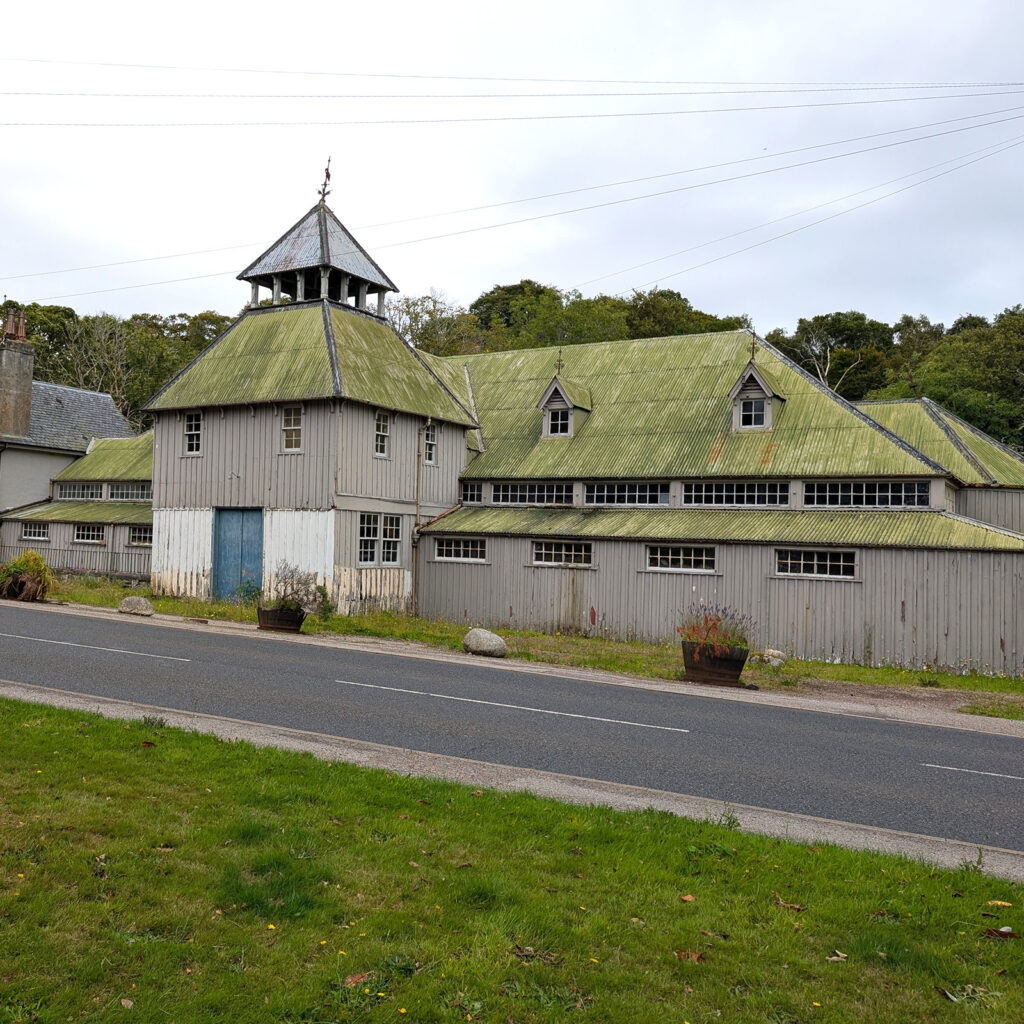
Drill Hall
The hall, funded by Sutherland Estates, was designed in 1890 and built in 1892 using timber from Balblair wood after a gale destroyed the trees. Modelled after the Seaforth Highlanders’ hall in Kashmir, it originally featured an all-around veranda that was later enclosed. A rifle range was added in 1920, and in 1938 the Territorial Army took over, adding new offices. The Drill Hall served military purposes during both World Wars, including hosting the Punjabi Mule Company in WWII. It is now a listed building.
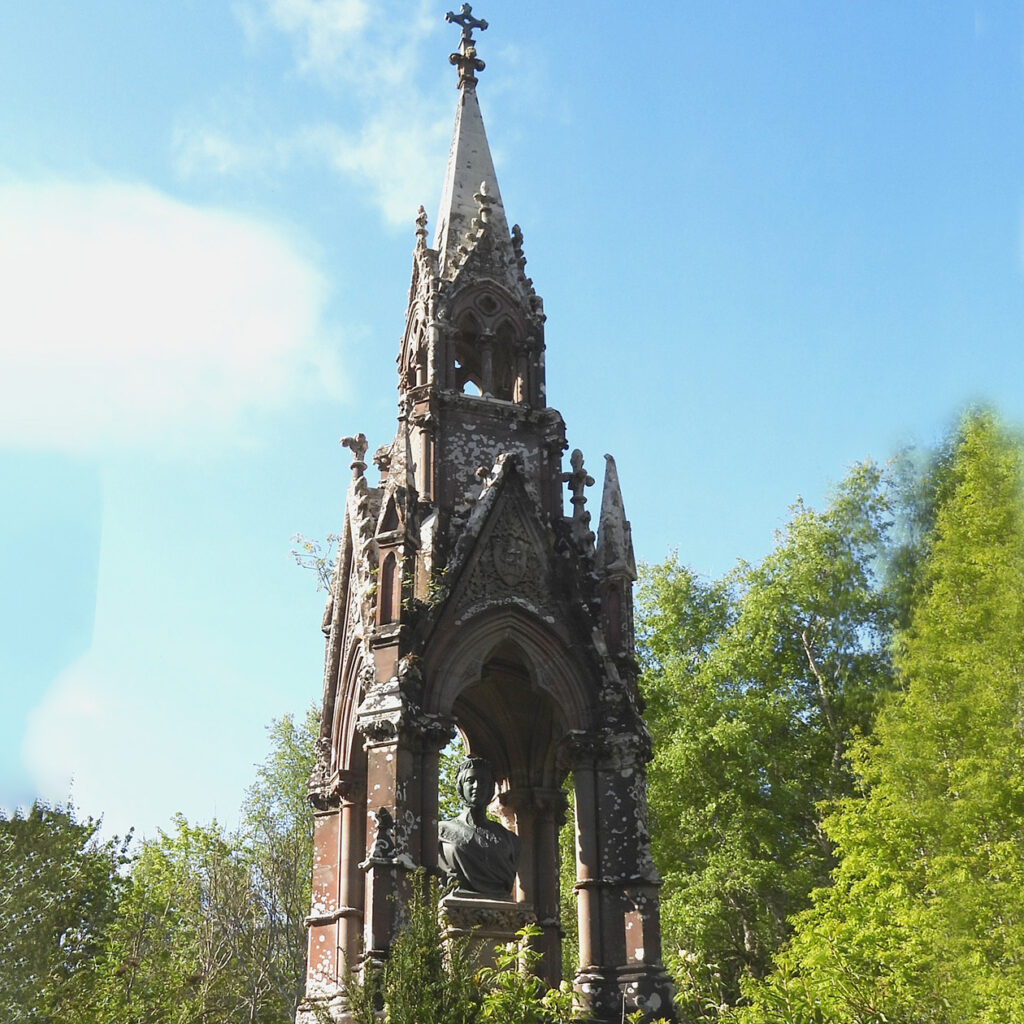
Duchess of Sutherland Monument
In the woodland Golspie side of Dunrobin Castle is a monument to Harriet, Duchess of Sutherland. The foundation stone of the memorial, laid by Queen Victoria in 1872, for Lady Harriet Howard Second Duchess of Sutherland (1806-68), stands in recognition of her lasting legacy and the important role she played in the area’s social progress.
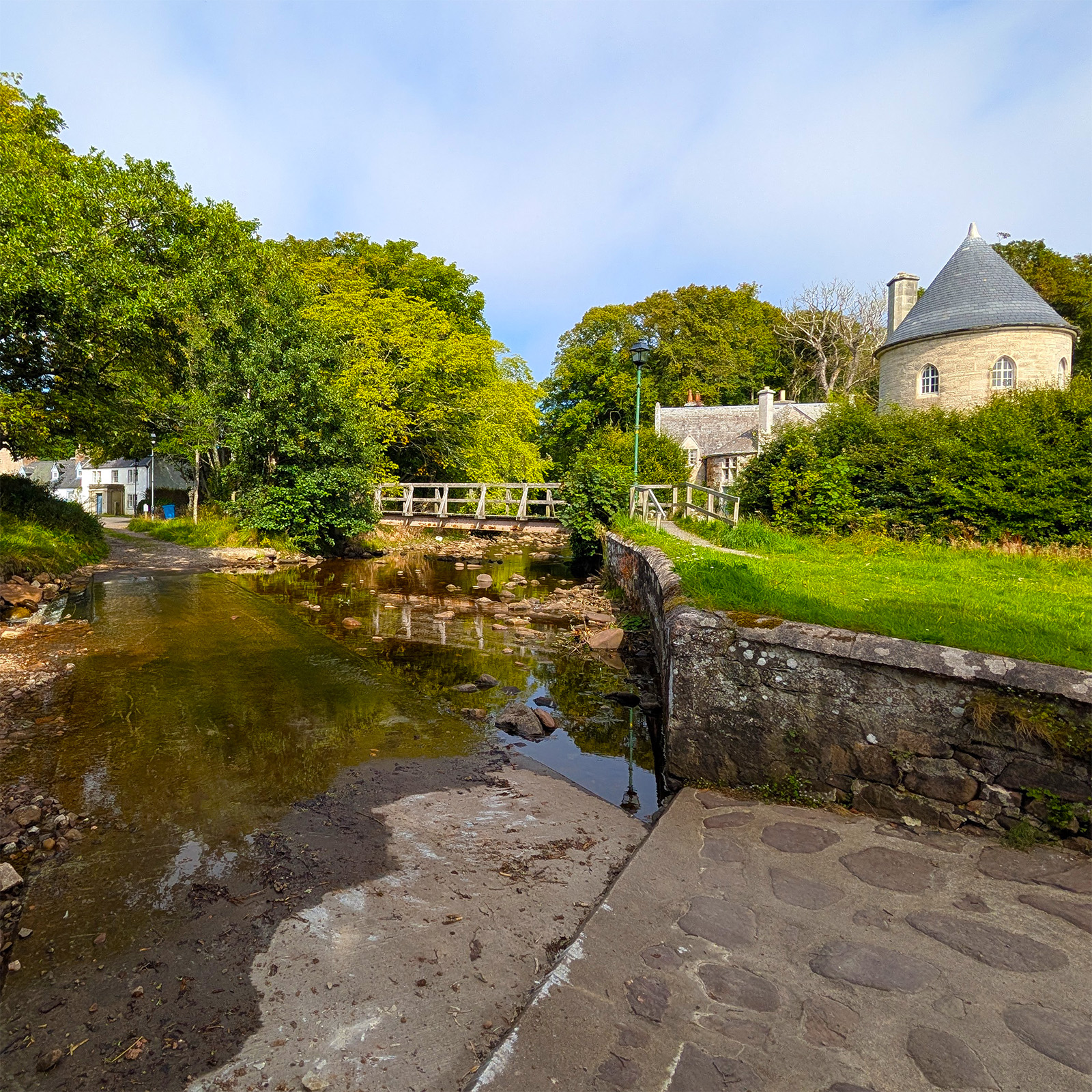
Duke Street
Duke Street, once part of the original road north to the castle and beyond, is located at the north end of the village opposite St Andrew’s Church, where it ends with a ford and footbridge crossing Golspie Burn to Tower Lodge (1865). At the ford end stands St Atheans, now a residential property, built in 1944 by the Royal Navy, and once featured rooftop guns. The street is lined with handsome cottages and homes influenced by the Sutherland family, including buildings that formerly served as the Sutherland Estate and Architect’s offices, completed in 1894. (click on image)
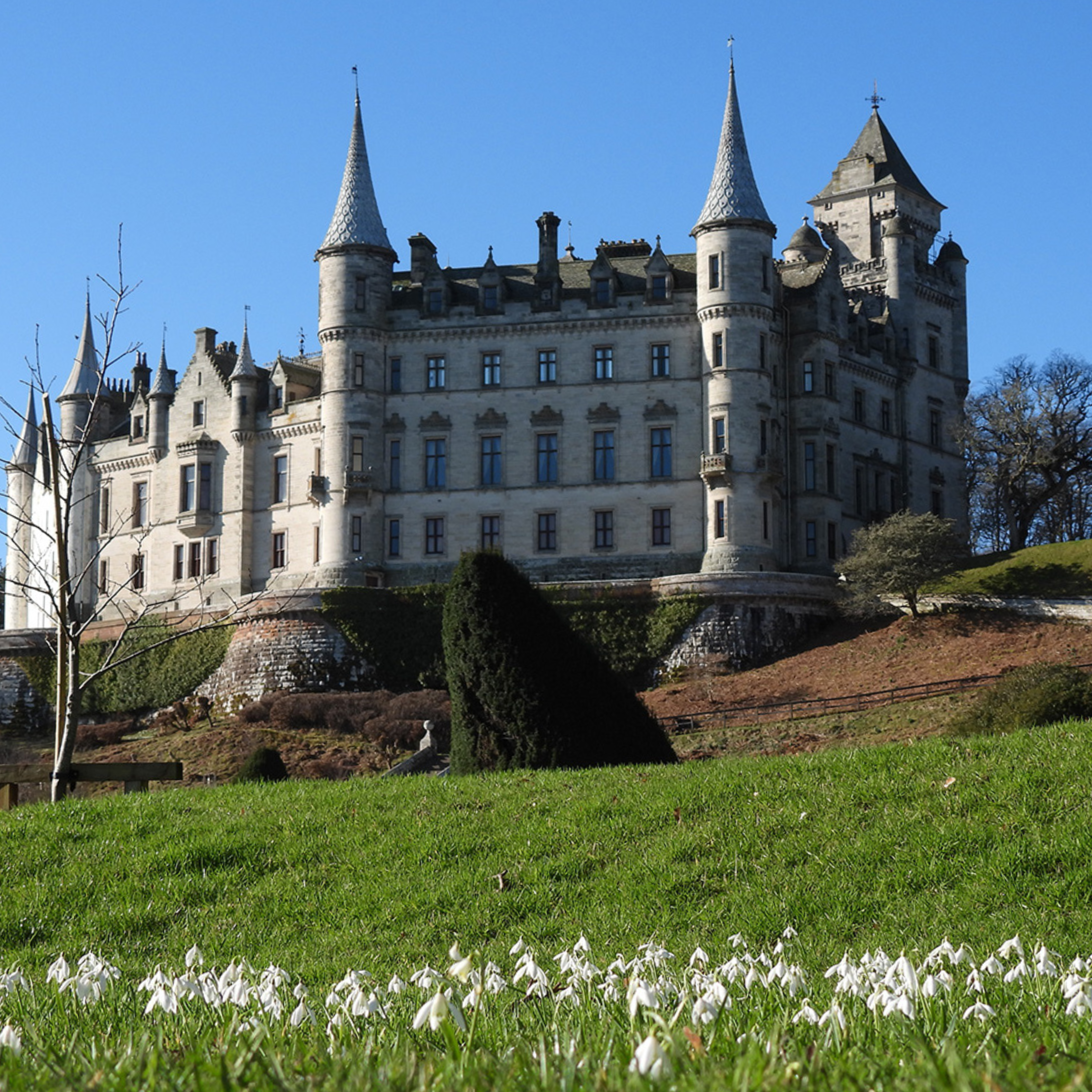
Dunrobin Castle
Dunrobin Castle stands as an iconic stately home in Sutherland, renowned for its grandeur and historical significance. Serving as the family seat of the Earl of Sutherland, Chief of Clan Sutherland, this castle embodies centuries of Scottish heritage. Situated just one mile (1.5 kilometres) north of Golspie, Dunrobin Castle enjoys a commanding position in the landscape, making it a prominent landmark in Sutherland
Described as a fairy-tale Highland castle, it is the largest castle in the Northern Highlands. Its majestic presence is further enhanced by its beautifully maintained formal gardens.
In the grounds is a fascinating museum, which features a diverse array of finds and artefacts. Among its notable exhibits are several Pictish stones, providing visitors with a glimpse into ancient Scottish history and culture.
Fishertown
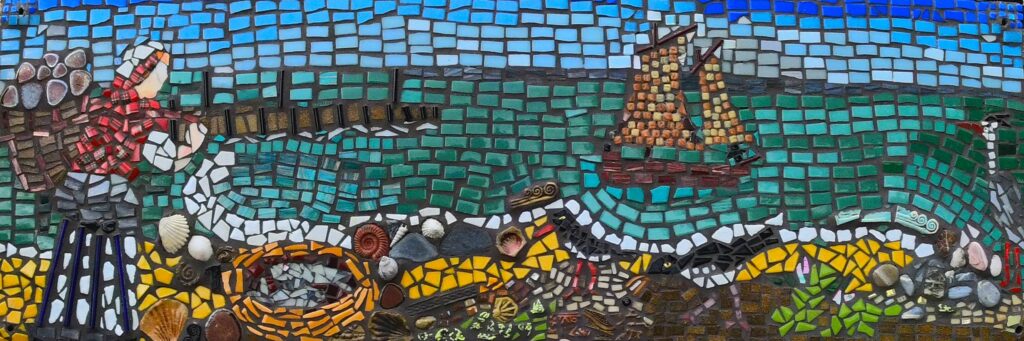
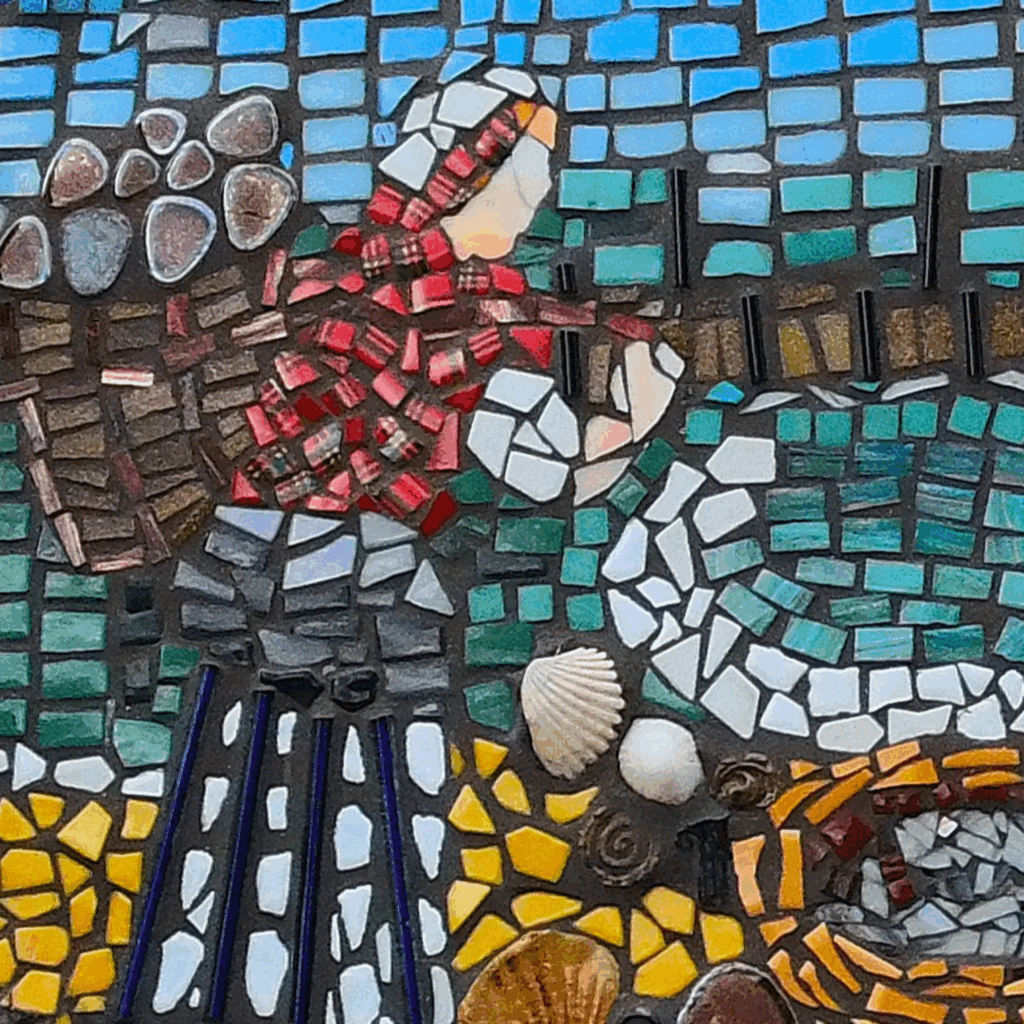
Running from the Golspie Pier to The White House, Shore Street was essentially the heart of Golpsie Fishertown. Once a thriving fishing community it was almost completely demolished in the 1970s. The heritage has been preserved via the ‘Golspie Fishertown Project’ which produced a display which can be viewed online here, and a booklet which can be bought at the Golspie Heritage Society. There are also mosaics on the shore front representing the heritage.
Fountain Road Hall
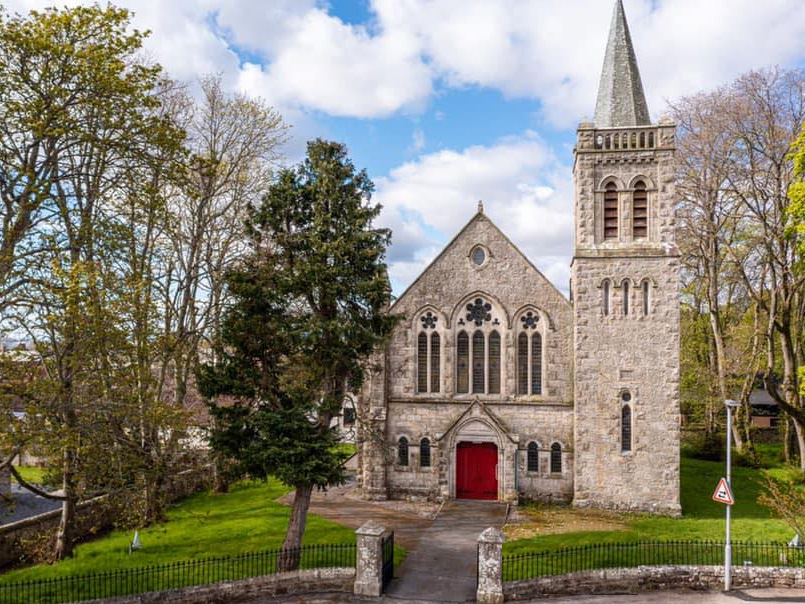
Built in 1906 as the United Free Church it was re-united with the Church of Scotland in Golspie in 1936. It was used alternatively with the Church of Scotland for many years. It is situated at the top end of Fountain Road, off Main Street. The extensively refurbished and community-owned, Fountain Road Hall offers modern facilities and hosts lively local events, markets, and celebrations for up to 150 people – a vibrant heart for Golspie’s gatherings.
Gala Week
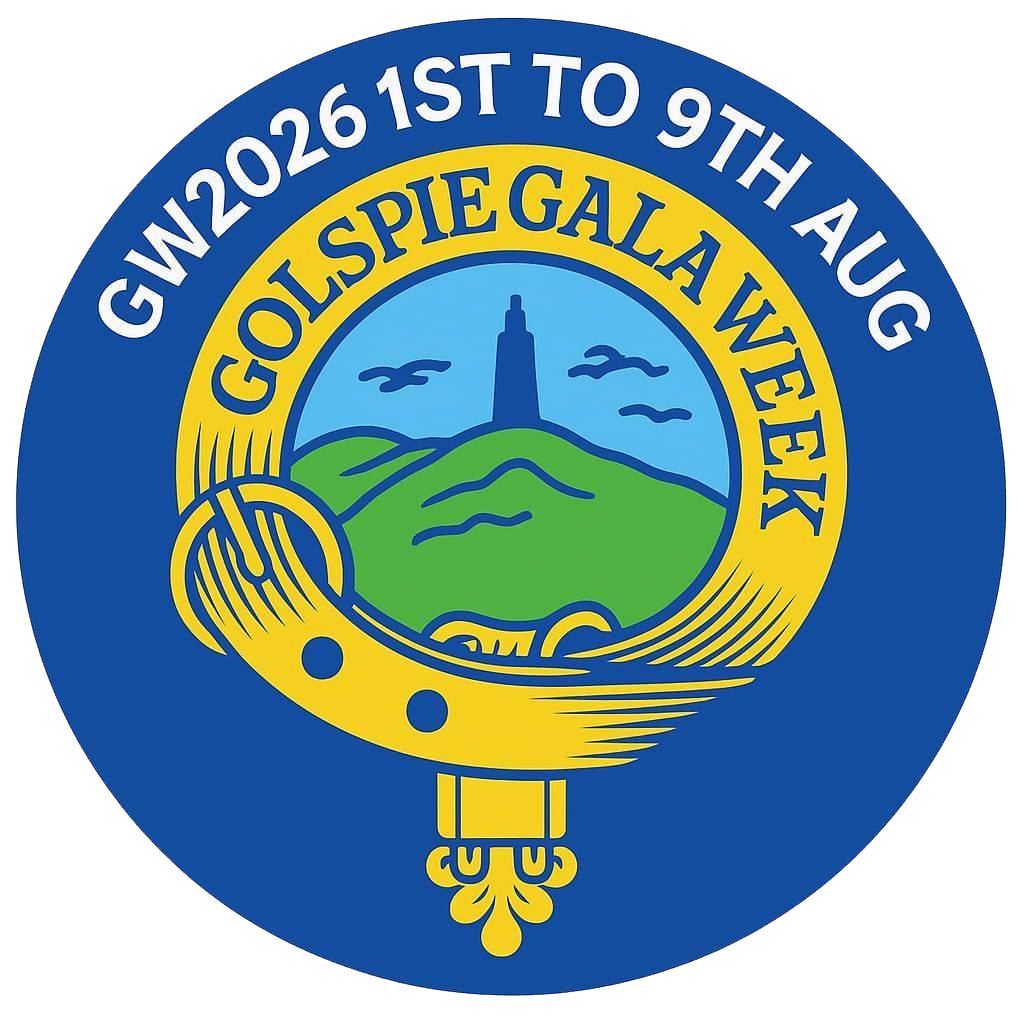
Since 1973, for one week in the summer, Golspie bursts into celebration for Gala Week – an annual highlight of the social calendar filled with events, exhibitions, parades, and entertainment, drawing locals and visitors together for fun and heritage.
Golspie Free Church
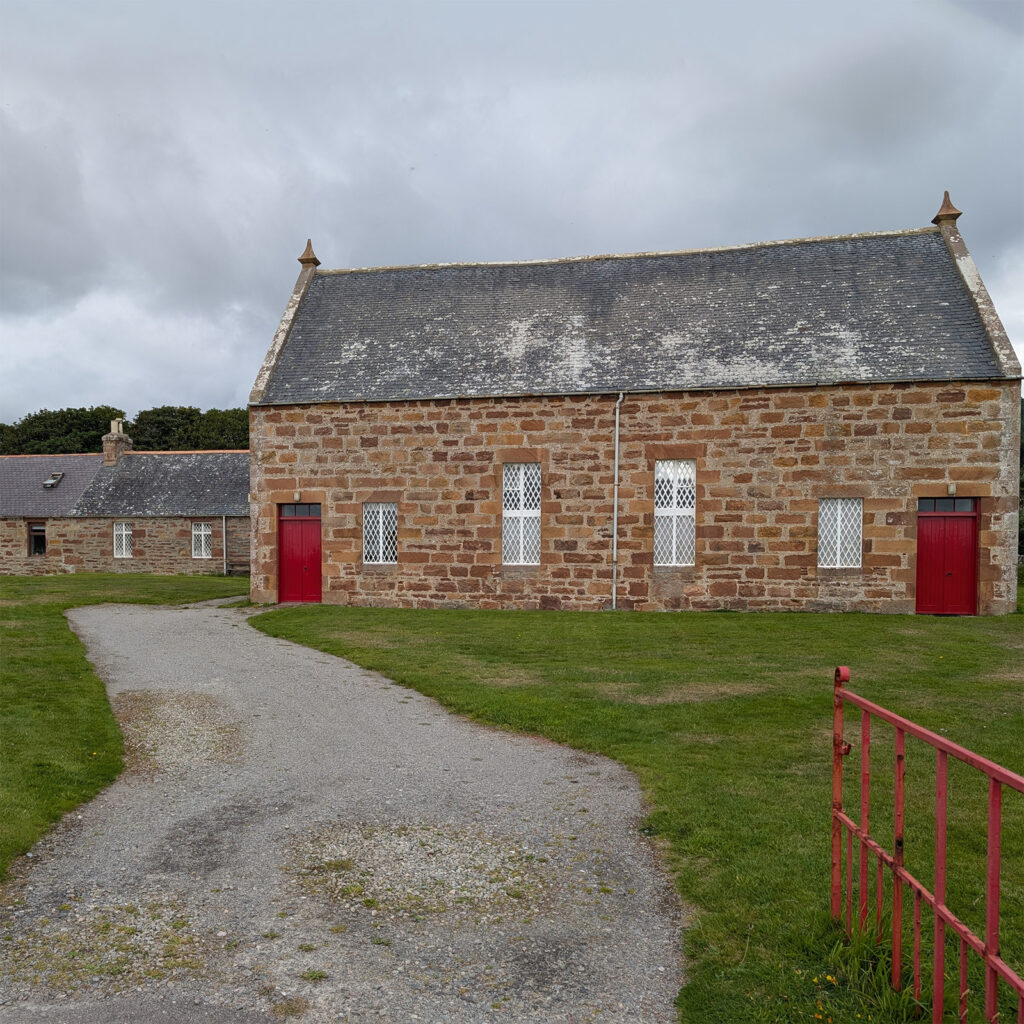
Golspie Free Church of Scotland is located at the west end of Church Street in Fishertown. It was built in 1844 as a simple T-plan church made of red rubble with symmetrical design features. The building also formerly held a free church school.
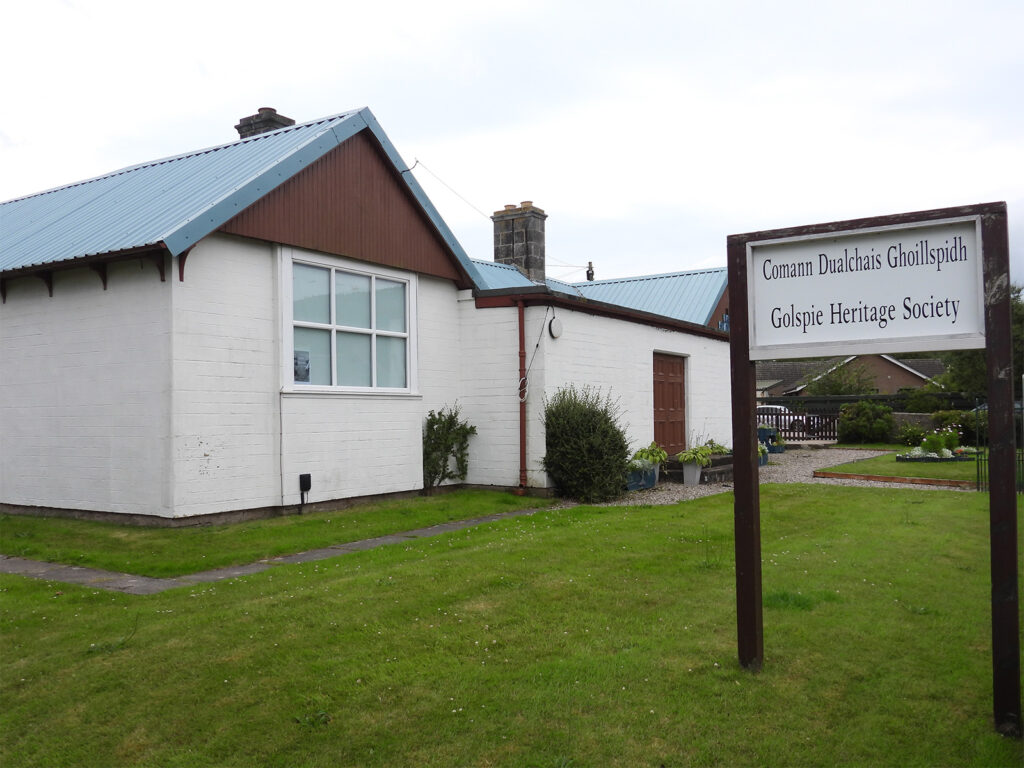
Golspie Heritage Society
Situated at the south end of the village the building known as the Fisherman’s Welcome now houses Golspie Heritage Society a volunteer organisation dedicated to preserving and promoting the area’s local history. It was commissioned in 1896 by Millicent, Duchess of Sutherland, as a recreational hall for the local fisherman. Golspie Heritage Society offer exhibitions, talks, and a fascinating collection celebrating the people and stories that shaped Golspie. Find out about opening times and exhibitions here.
Golspie Pier
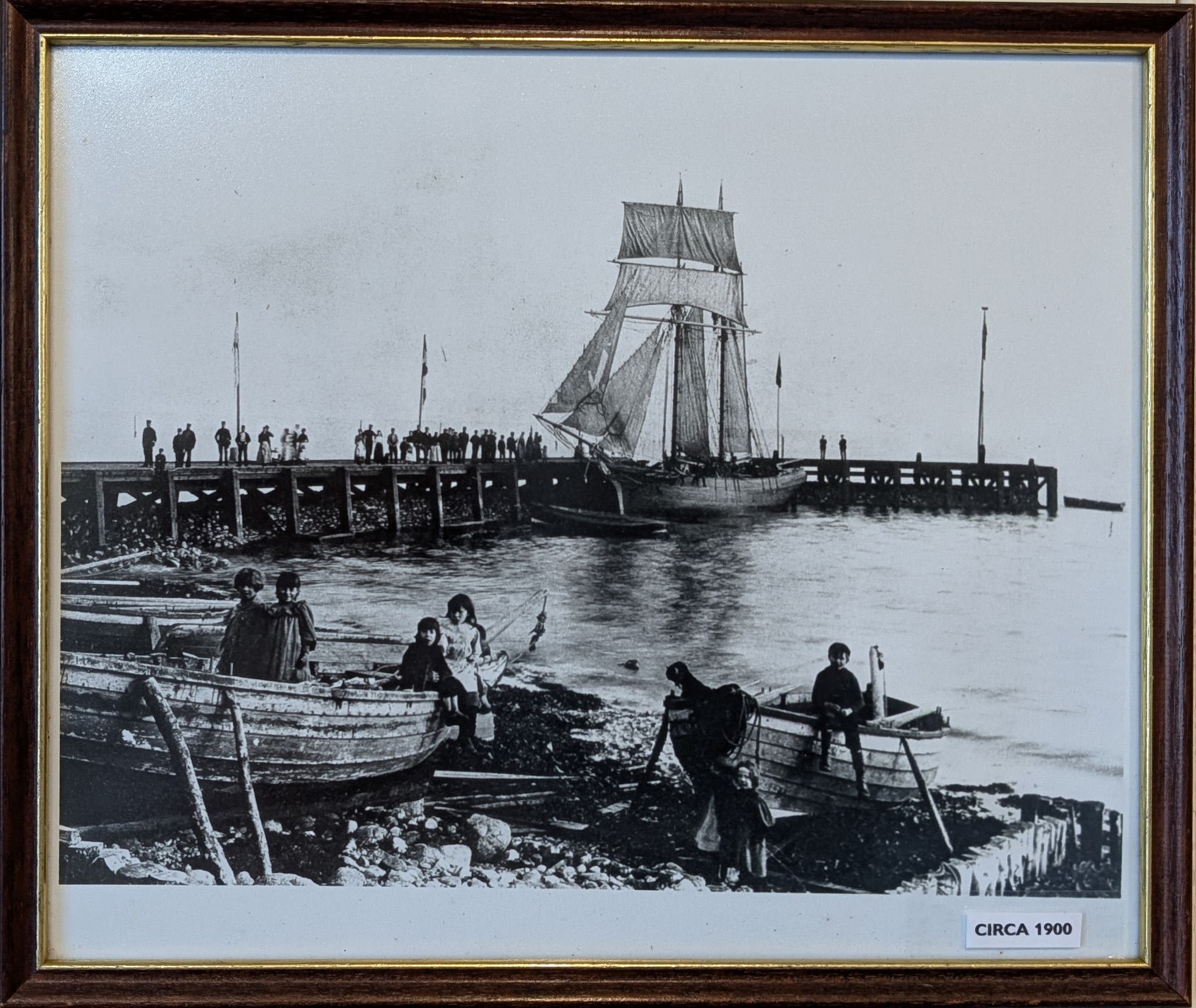
Before Golspie Pier was built, women had to wade into deep water carrying their husbands and their nets to the fishing boats, and also to help the fishermen land their catches. In the early 1890s, a local committee raised funds for a pier, aided by government and community support. The new pier was officially opened on 18th October 1895 by the Duchess of Sutherland, marked by a grand ceremony, regatta, and banquet.(click on image) photo courtesy of Golspie Heritage Society Parts of the original pier can still be seen on the north side of the current pier.
Golspie Old Bridge
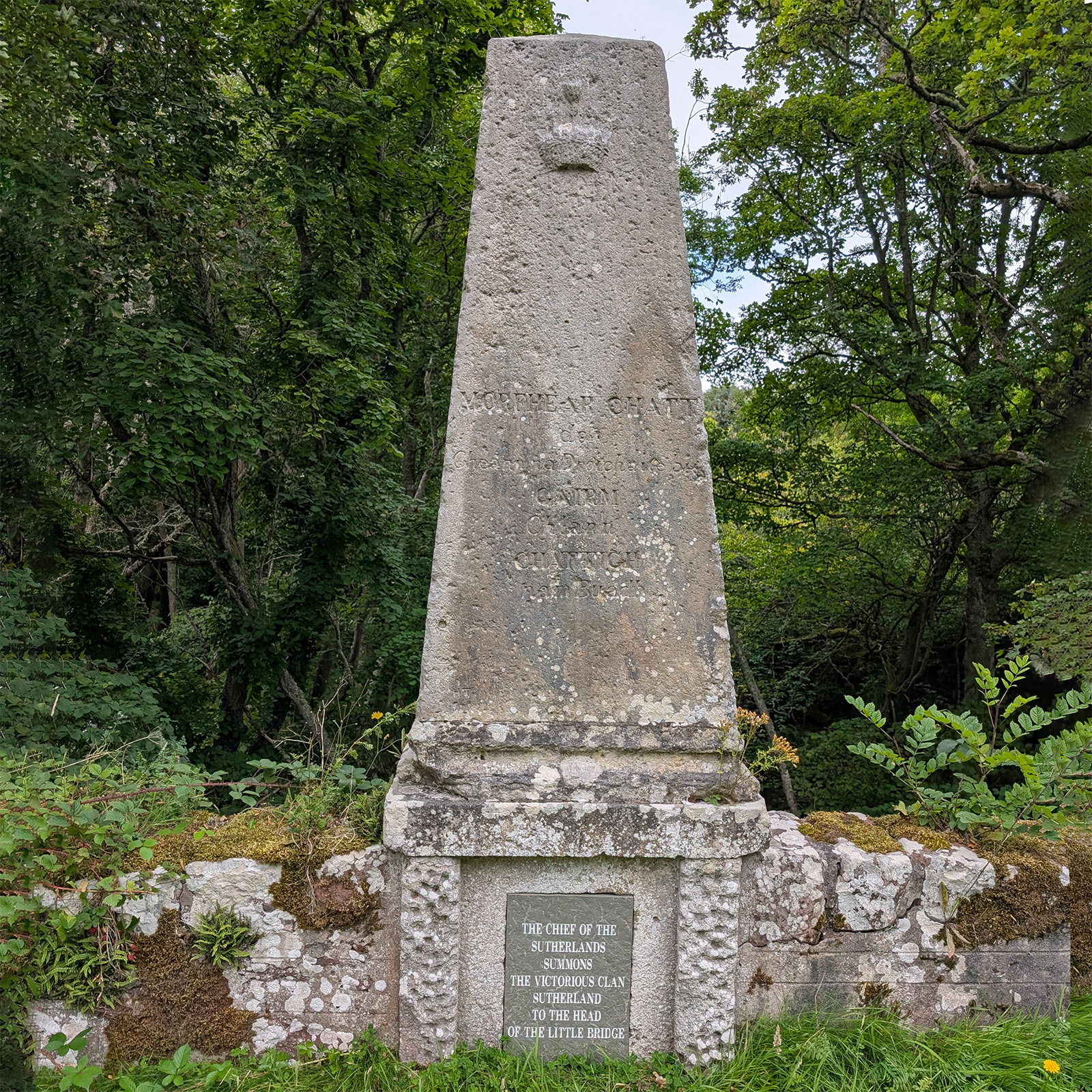
The bridge, which no longer carries traffic and is now covered in grass, is located at the north end of Golspie village, over the Golspie Burn, near the start of the popular Big Burn walk. It was constructed by Thomas Telford in the early 19th century as part of a major road and bridge building project in the Scottish Highlands. An obelisk stands in the middle of it with the Gaelic inscription, “Morfhear Chatt/do/Cheann-na-Droichait big Gairn/Chlann Chattich/Nam Buadh” this translates as “The Chief of the Sutherland Clan to the head of the little bridge calls the Sutherland men of the victories” thus historically marking the spot as a rallying point for Clan Sutherland. The bridge is a local heritage site and a popular spot for walkers exploring the Big Burn trail and surrounding woodland areas. Benches are available for visitors to rest and enjoy the peaceful location. (click on image)
St Andrews Church
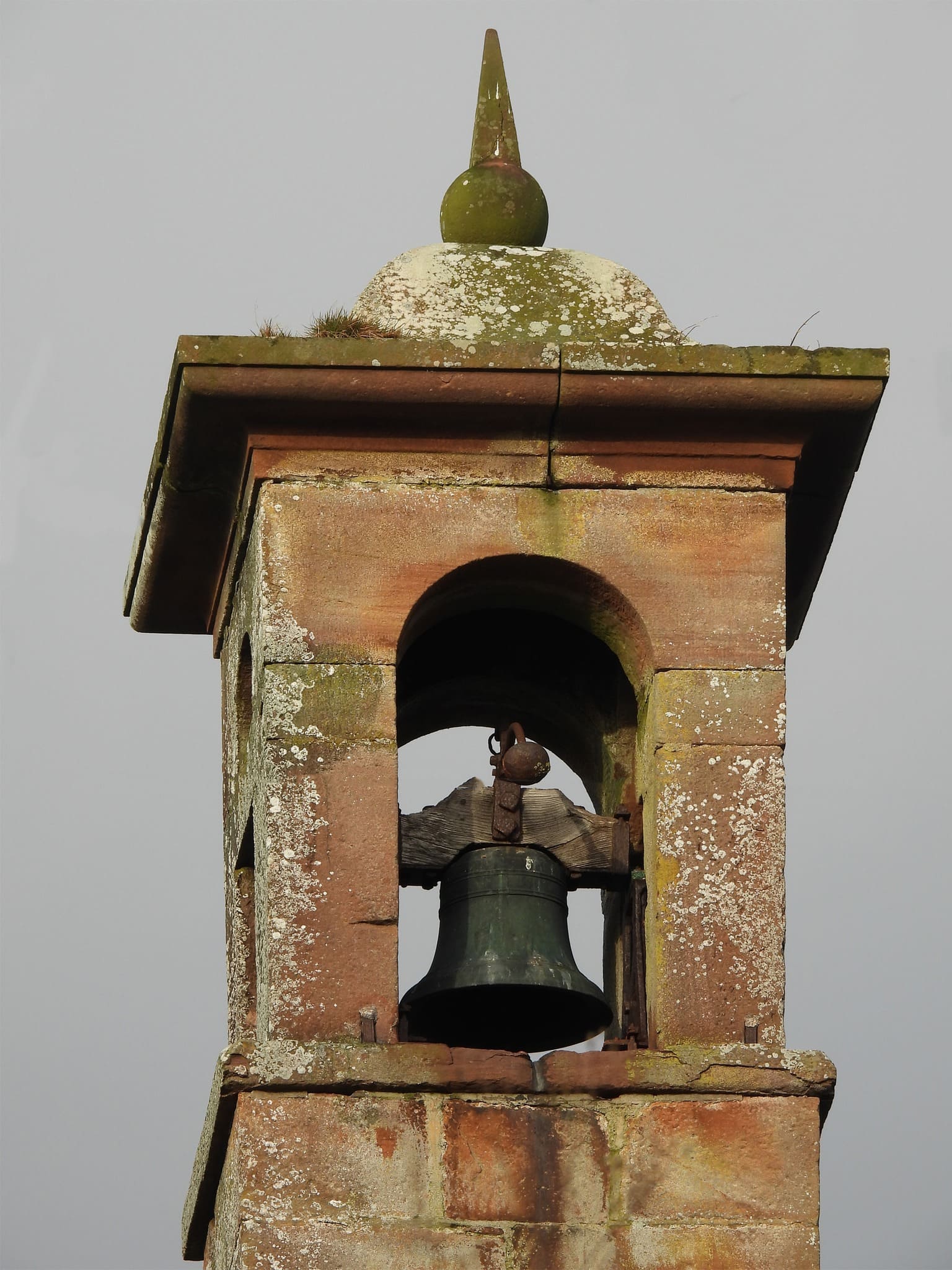
Located on Main Street at the north end of the village between Back Road and South Argo Terrace stands St Andrews Church. Built between 1737 and 1739, replacing earlier chapels dating back to the 13th century when the Earl of Sutherland established the original chapel for his family. It became the parish church in 1619. Later additions include the south transept (1751), belfry (1774), and porch (1849). Notable features are the canopied pulpit and Sutherland Loft, both carved in the late 1730s by Kenneth Sutherland, carpenter at Dunrobin Castle. The bell is inscribed as first founded 1696 and re-founded 1728 by Robert Maxwell of Edinburgh. (click on image)
‘The Mannie’ Duke of Sutherland
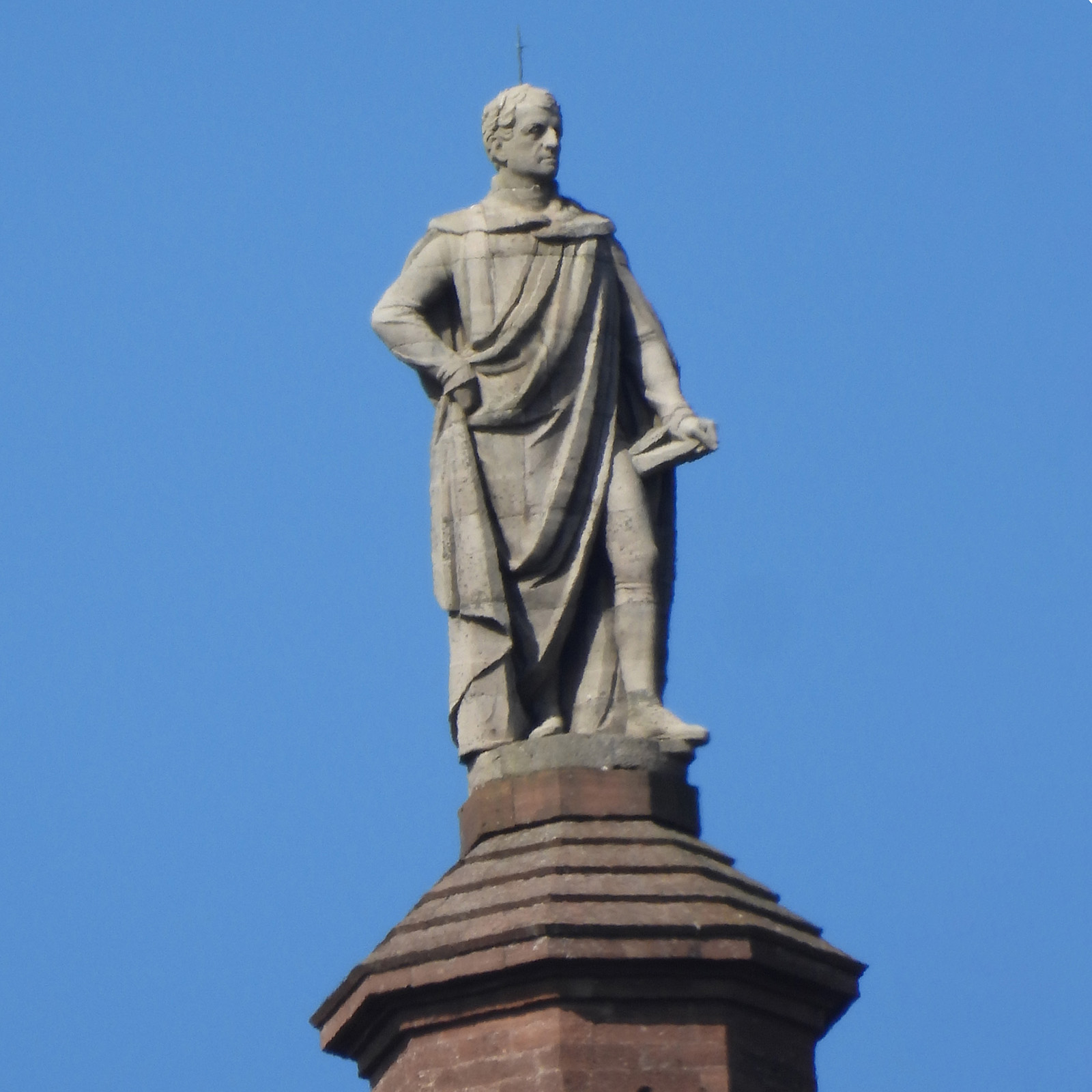
In 1834, tenants were compelled to contribute by subscription towards the erection of a monument in memory of George Leveson-Gower, the 1st Duke of Sutherland, a key figure in the controversial Sutherland Clearances. Work on the monument commenced promptly. The stone used for the substantial base and plinth was sourced from a quarry on the north-east side of Ben Bhraggie, situated approximately 45 metres (50 yards) from where the monument now stands. The statue was sculpted by Sir Francis Chantrey. It was transported to the summit of Ben Bhraggie in separate pieces, carried by horse and cart. The monument was completed in 1837 and, ever since, has dominated the landscape of east Sutherland. It is known locally as “the Mannie” and remains a prominent feature in the region. (click on image)
YMCA Building Clock Tower
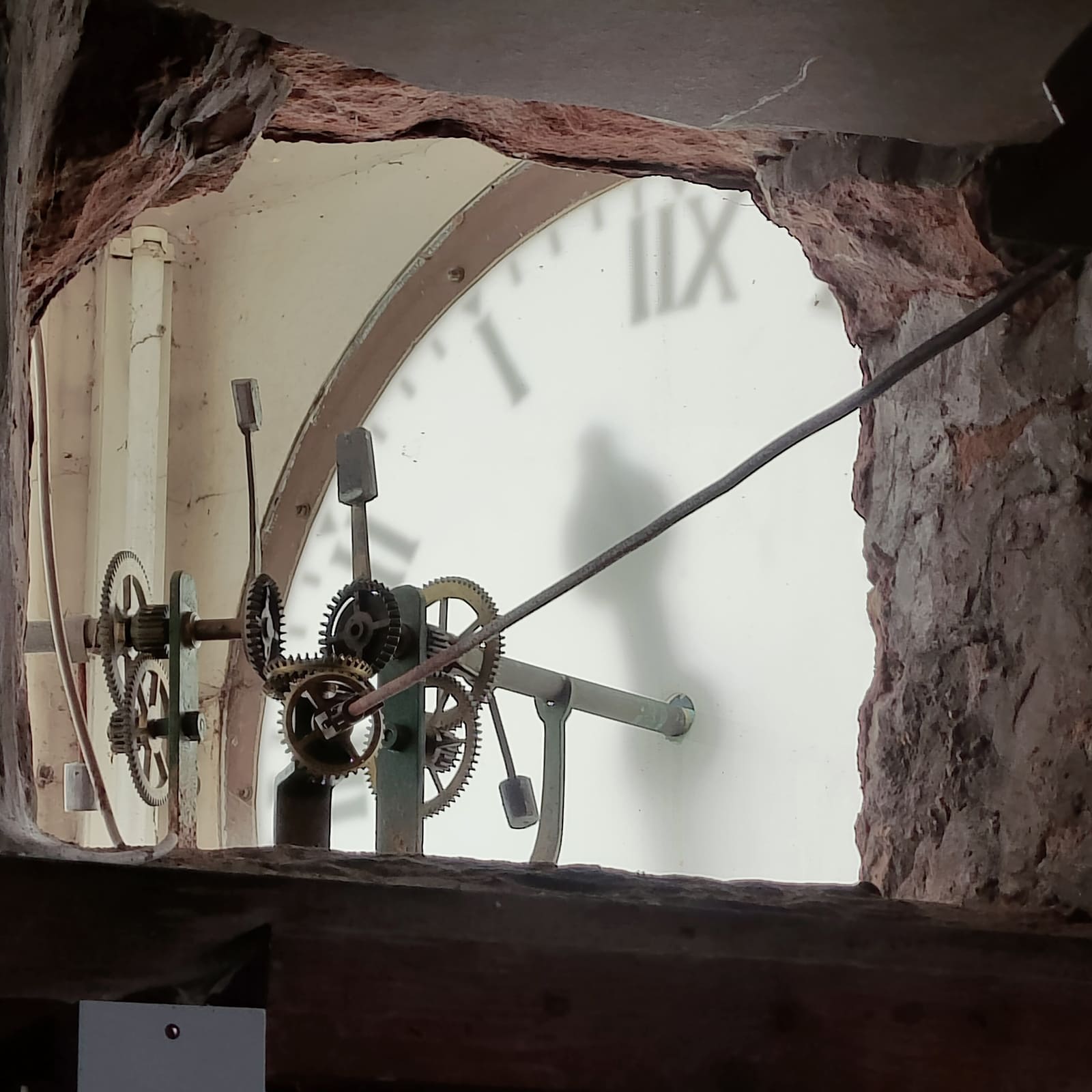
The clock on the YMCA Building located on Main Street displays two notable dates, 1837 and 1897, along with the inscription “VR” (Victoria Regina). Similar clocks were commissioned and installed throughout the United Kingdom and the Commonwealth to commemorate Queen Victoria’s Diamond Jubilee. The YMCA Building itself was completed in 1901. (click on image)
War Memorial
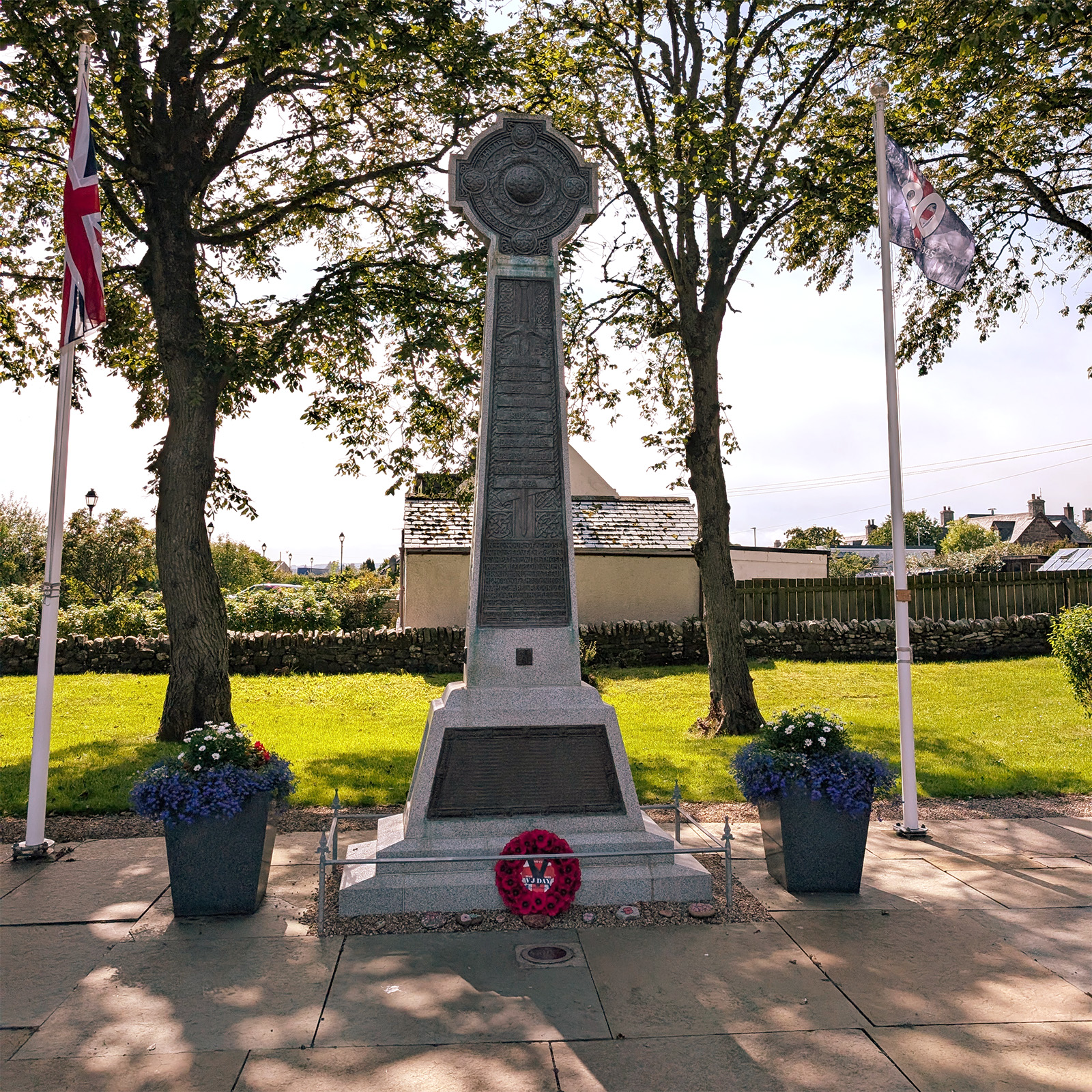
At the junction of Church Street, Main Street and Station Road, set in a well-tended garden, stands the Golspie War Memorial in memory of the village men and one woman, Mary Mackay, who lost their lives in the Wars. 53 men from the First World War and 19, plus Mary, from the Second World War. The award winning garden offers a peaceful place for reflection and community ceremonies. (click on image)